Clearer user journeys
Help customers and staff find the next action.

Our Services
Dblock brings interface design, application engineering, automation, data, infrastructure and operations into one coherent build.

Our approach
Six connected disciplines. From the customer journey to the operating foundation, every layer has a role.
Select an engineering layer
Websites, product interfaces and customer or staff journeys. Navigation, accessible controls and useful feedback help people complete the task.
Connects to Applications: the visible journey follows the underlying product rules.
Workflows, roles, records, dashboards and business logic. In the Dblock Store, product selection, order management and fulfillment have explicit responsibilities.
Connects to Data: records preserve the information each action needs.
Integrations, events and processes that reduce manual handoffs. Defined boundaries, verification and repeat-safe actions keep connected workflows understandable.
Connects to Operations: unresolved events need a visible owner and recovery path.
Models, search, reporting, evidence and structured information. Product and order snapshots preserve the scope selected at the time of purchase.
Connects to Applications: shared definitions keep records and actions consistent.
Environments, storage, deployment and service foundations. Controlled releases and tested changes support a product beyond its first launch.
Connects to Operations: maintenance and recovery belong in the plan.
Permissions, monitoring, backups, support boundaries and operational controls. Authorized staff actions and audit trails are part of the Dblock commerce implementation.
Connects to every layer: who can act, what changes and how recovery works.
Real interfaces
Discovery, scope and review connect in the Dblock Store. These are actual interfaces, shown with synthetic review data; live purchasing remains disabled.
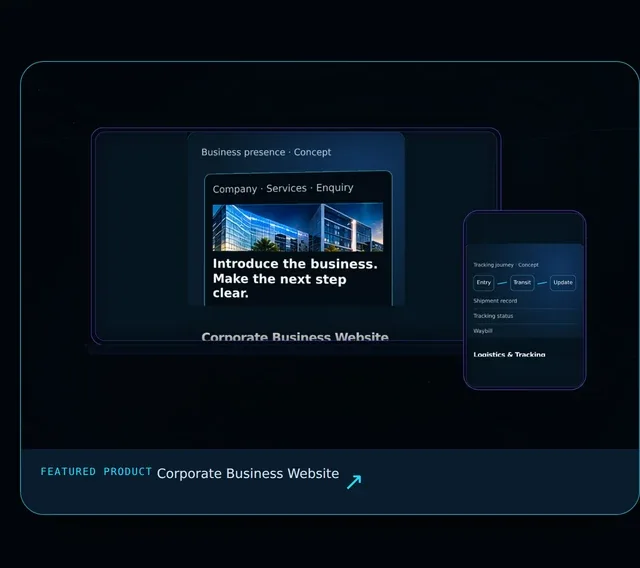
The storefront connects product discovery with an explicit release state.
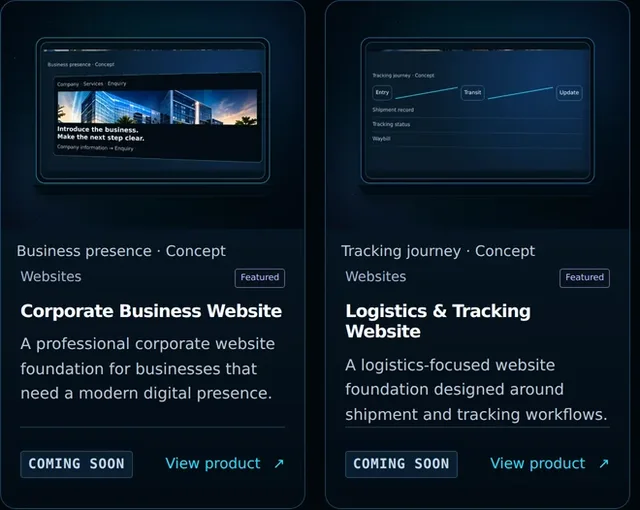
The catalogue brings product scope and current availability together.

Product detail keeps the included scope and delivery options in one place.
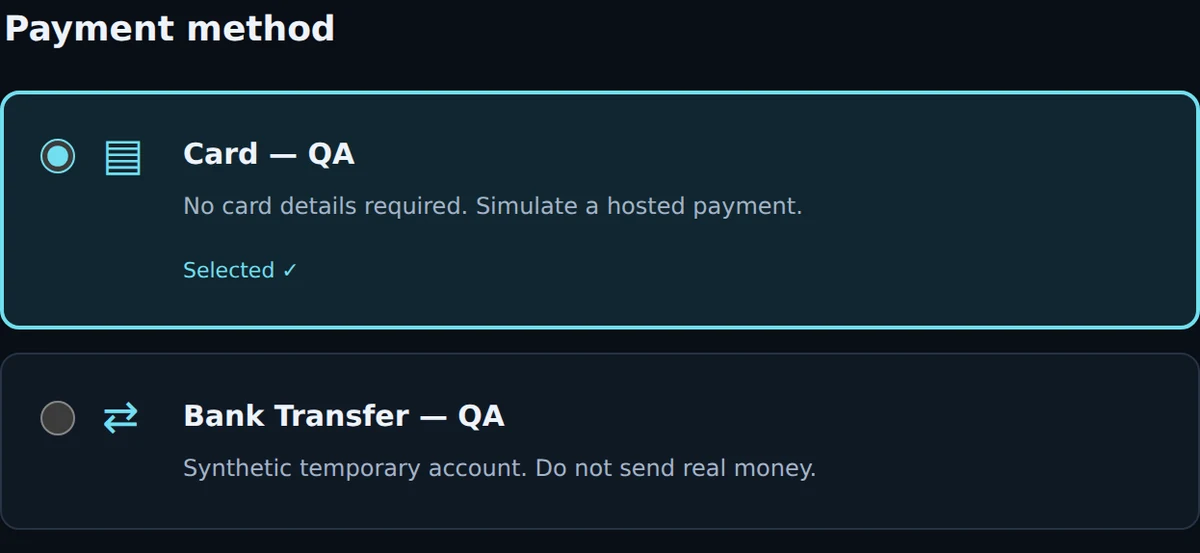
An explicit payment-method decision in the isolated mock workflow.
Practical outcomes
Clearer journeys, fewer handoffs and systems that remain understandable as the work changes.
Help customers and staff find the next action.
Connect information where a repeated transfer adds friction.
Keep records, roles and reporting coherent.
Define permissions, recovery and support boundaries.
Systems that can be operated and changed.
How we deliver
Requirements, design, implementation and release decisions stay connected.
Clarify the requirement, constraints and acceptance criteria.
Make the journey and its responsibilities understandable.
Connect the product, verify behavior and review the interface.
Release after approval, with an operating and recovery plan.
Let's build together
Tell us what exists today, what is getting in the way and what the next system needs to make possible.